How to Sponsor a Child Through School in Rural Kenya Securely: A Safe, Tax-Deductible Guide
How to sponsor a child through school in rural Kenya securely: what school actually costs, how to avoid sponsorship scams, how fees reach schools safely, and how to give tax-deductibly from the US.
GiveToAfrica team · · 11 min read
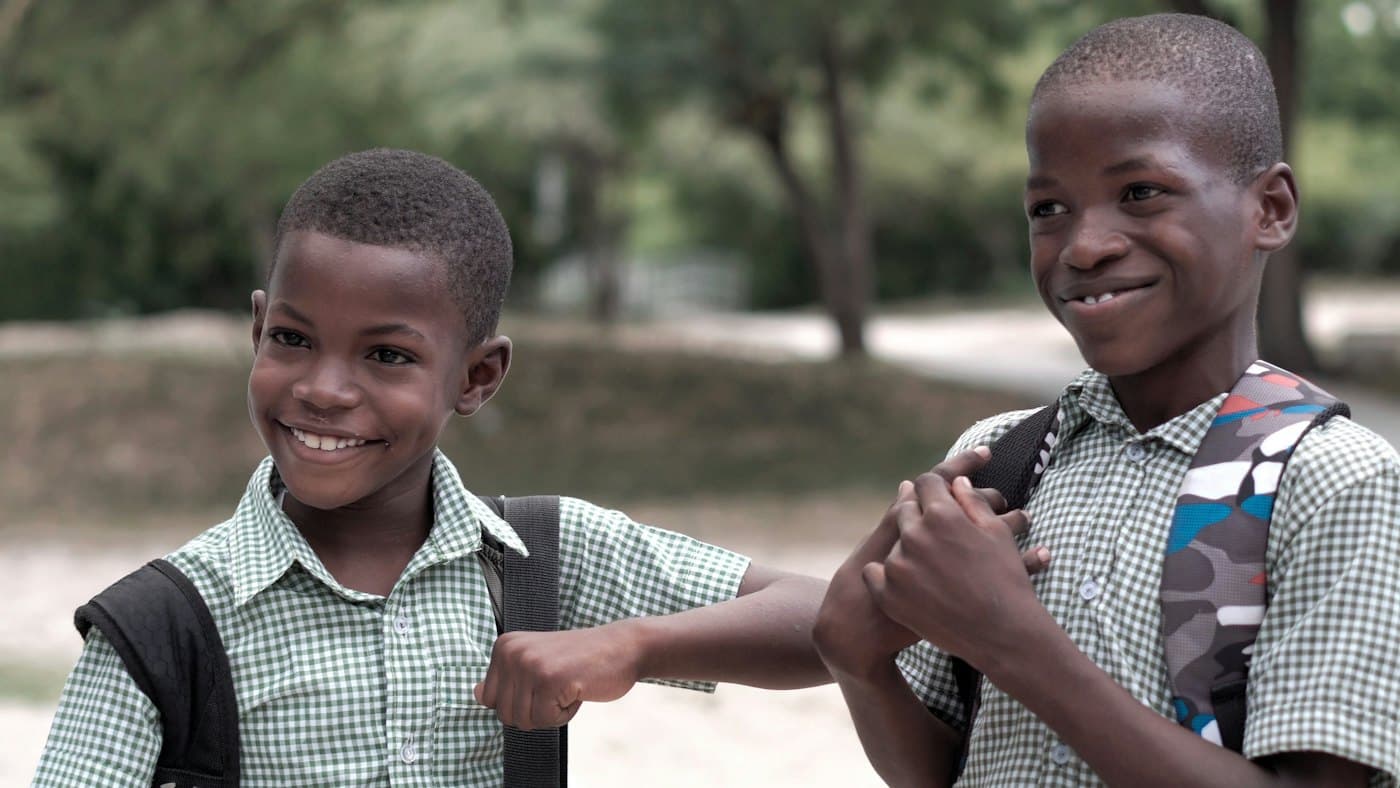
Illustrative photo: TopSphere Media / Unsplash
If you want to sponsor a child through school in rural Kenya securely, you are right to focus on security. Sadly, some online sponsorship requests are scams, and even honest arrangements can go wrong when money is sent informally. This guide explains what school really costs, how to make sure your money reaches a school rather than disappearing, and how to give in a way that is safe and tax-deductible in the United States.
We'll also explain how GiveToAfrica, a registered 501(c)(3) nonprofit (EIN 27-3982730), supports children's schooling through vetted local partners, with fees paid directly to schools and progress reported every quarter.
Why children in rural Kenya still leave school
Kenya has made great progress in getting children into school, and education is highly valued by Kenyan families. However, many families in rural areas still struggle with the costs that come with it.
For example, even where tuition is free or subsidised, families often pay for uniforms, shoes, books, exam fees, and boarding or levies at secondary level. Consequently, when a harvest fails or a parent falls ill, school costs are often the first thing a family drops.
In addition, older children may be kept home to work, care for siblings or fetch water. Similarly, girls may miss school every month without sanitary products. As a result, children who start school with every intention of finishing can drift out of it.
Across sub-Saharan Africa as a whole, UNESCO reports that the region is home to more than half of the world's out-of-school children and young people (UNESCO GEM Report). Therefore, steady support at the right moment matters enormously.
The risks of informal child sponsorship
Many donors first hear about a child who needs school fees through social media, a church contact or a message from a stranger. Some of these requests are genuine. However, informal sponsorship carries real risks.
Money that never reaches the school
When money is sent by wire or mobile transfer to an individual, there is no way to know it paid school fees. Consequently, a well-meaning sponsor may pay for years without the child ever attending.
Scams that exploit children's photos
Unfortunately, some scammers use photos of real children to raise money that the children never see. In fact, sponsorship scams are one reason reputable organisations don't publish children's photos and personal details.
No tax deduction
Gifts sent directly to individuals or foreign organisations are generally not tax-deductible in the US. By contrast, gifts to a US-registered 501(c)(3) generally are.
No safeguarding
Finally, direct contact between adult strangers and children overseas can put children at risk. Therefore, reputable programmes manage contact carefully, or avoid it altogether.
Warning signs of a sponsorship scam
If you want to sponsor a child through school in rural Kenya securely, it helps to recognise the common warning signs. First, pressure to pay urgently, often "before the school sends the child home tomorrow". Second, requests to pay by gift card, wire or mobile money to an individual. Third, refusal to put you in touch with the school or a registered organisation.
In addition, be cautious if the same child's photo appears in several appeals, or if the story changes when you ask questions. Similarly, a request for ever-increasing amounts, such as sudden medical bills or travel costs, is a red flag.
If something feels wrong, stop and check. A genuine school or registered charity will welcome your questions. By contrast, a scammer will usually push harder or disappear.
How to sponsor a child through school in rural Kenya securely
Here is what a secure approach looks like. Whether you give through us or another organisation, look for these features.
First, give through a registered charity rather than to an individual. Second, make sure school fees are paid directly to the school, never in cash to families. Third, look for a caseworker or mentor who visits the child and checks attendance. Fourth, expect regular reports on progress. Finally, make sure children's privacy is protected.
That is exactly how our children's causes work. Fees go straight to schools, caseworkers check attendance, and every donor receives a quarterly field report on the children in the programme as a group.
What a secure programme gives you in return
When you sponsor a child through school in rural Kenya securely, you get more than peace of mind. First, you get a tax receipt, valid for your US tax records. Second, you get regular reports showing attendance and progress. Third, you know that a caseworker is checking on each child, and that fees reach the school.
Moreover, a pooled, secure programme reaches the children who need it most, not just the ones who happen to have a contact overseas. As a result, your gift supports fairness as well as schooling. Finally, if your circumstances change, you can pause or cancel a monthly gift at any time, without leaving a particular child suddenly without support.
Where GiveToAfrica's projects are
We want to be clear about location. Our site does not list the exact countries or districts of each round's projects, because partner locations change between rounds. Therefore, if you want your gift to support children in rural Kenya specifically, please contact us before you give. We will tell you honestly whether this round's schooling projects include Kenya, and if not, where they are.
GiveToAfrica is a registered 501(c)(3), EIN 27-3982730, which you can confirm in the IRS Tax Exempt Organization Search. You can read how we work and why we send field reports.
Our Services: ways to support a child's schooling
Here are seven ways you can support children's schooling through GiveToAfrica. Each links to a cause you can give to directly.
Paying school fees directly to schools
Our keep children in school cause pays fees and exam costs directly to schools for children at risk of dropping out. For example, $180 covers a full year of fees and exam costs for one pupil.
Because fees go to the school, not the family, the money can only be used for schooling. Our target is 400 pupils kept in school, with 95% term-to-term retention.
Uniforms, shoes and supplies
A child without a uniform or shoes is often sent home, and may be too embarrassed to return. Therefore, the same cause buys uniforms, shoes and supplies. For instance, $120 buys uniforms and shoes for two pupils, and $50 buys exercise books, pens and school bags for two pupils.
Attendance mentors
Mentors visit the family whenever a child misses three days in a row. Consequently, problems such as illness, work or family crises are spotted early and dealt with before a child drops out.
Full child sponsorship
Our child sponsorship cause adds health checks, nutrition and a caseworker to schooling. A full year costs $468 in our current budget, or $117 for a term.
Secondary school scholarships
At secondary level, boarding and fees rise sharply. Our scholarships cause funds bright students from poor families, with a mentor until they graduate. For example, $350 pays a term of secondary boarding fees, and $1,100 covers a full year.
School meals
Hungry children can't concentrate, and a daily meal is often what keeps them coming. Through school meals, $75 feeds one child for a whole term, and $225 covers a full school year.
Sanitary kits for girls
Girls who lack sanitary products often miss a week of school every month. Therefore, 10% of the keep children in school budget buys sanitary kits for girls, and our target is that 60% of supported pupils are girls.
Keeping girls in school in rural Kenya
Girls in rural areas often face extra barriers. For example, they may be kept home to fetch water, care for younger siblings or help earn money. Similarly, many miss school every month without sanitary products or private school toilets.
Therefore, several of our causes focus on girls. For instance, sanitation projects build lockable latrine blocks and provide menstrual hygiene kits, and vocational training helps young women who have already left school learn a trade. Consequently, a gift to schooling can also be a gift to girls' futures.
What does it cost to put a child through school in rural Kenya?
Costs vary by school, level and region. However, our current budgets give a realistic picture of the main items.
At primary level, the biggest costs are usually uniforms, shoes, supplies and exam fees. For example, $180 covers a year of fees and exam costs, and $120 covers uniforms and shoes for two pupils.
At secondary level, costs rise, especially for boarding schools. For instance, a full year of secondary school costs about $1,100 in our scholarships budget, including tuition and boarding.
Therefore, a monthly gift of $50, our minimum, covers much of a primary pupil's yearly costs. Meanwhile, secondary scholarships usually need larger or pooled gifts.
Where each dollar goes
When you fund keep children in school, about 40 cents of every dollar pays fees and exam costs directly to schools. Next, 25 cents buys uniforms, shoes and supplies, and 17 cents pays attendance mentors. Finally, 10 cents buys sanitary kits for girls, and 8 cents covers monitoring and your report.
Therefore, you can see exactly how a $100 gift would be used before you give. Every quarter, the field report compares the plan with what was actually spent.
How children are protected
Child protection comes before everything else. Therefore, we follow firm rules. First, children's names, photos and locations are never published. The photos on our site are illustrative, not children in our programmes. Second, partners and caseworkers are trained in safeguarding. Third, sponsors do not contact children directly.
Instead, sponsors receive the quarterly field report on the programme's children as a group, including attendance and progress. As a result, you can follow the impact of your gift without putting any child at risk.
A term of school support, step by step
Here is how a term of support usually unfolds. It describes the process, not any particular child.
Before term
First, the partner confirms enrolment with the school and pays fees directly. Next, children receive uniforms, shoes and supplies where needed.
During term
Then, attendance is checked. If a child misses three days in a row, a mentor visits the family. Where the school meals programme runs, children eat a hot lunch every day.
End of term
Finally, the school reports attendance and results, and the caseworker records progress. These figures are combined into the field report you receive.
How to sponsor a child through school from the USA
Here are the ways US donors most often give.
Give monthly
Monthly giving suits schooling, because costs fall due every term. On our donation page, choose keep children in school or child sponsorship, select "Monthly" and pick an amount from $50. Read our guide to monthly giving to Africa.
Give once
Alternatively, give once, for example $180 for a year of fees and exams. You can also give crypto; see our guide to donating crypto to Africa.
Give from a DAF or IRA
Recommend a donor-advised fund grant using EIN 27-3982730 and name the cause in the note. If you are 70½ or older, see our guide to giving from your IRA.
Sponsor as a group
Classes, churches and families often sponsor schooling together. Volunteer with us to organise a group, and read our wider guide to sponsoring a child in Africa.
Supporting Kenyan children from across the United States
Donors in every state support schooling in East Africa. Here are some communities with close ties to Kenya.
Minneapolis, Dallas and Atlanta
These cities have growing Kenyan communities, and many families already support relatives' schooling back home. Consequently, many add a gift to a registered programme for children outside their own family.
Churches with Kenyan partners
Many American churches have partner congregations or schools in Kenya. As a result, church groups often fund school fees and uniforms together.
Universities and running communities
Kenya's world-famous distance runners have inspired many American running clubs and university athletics programmes. Similarly, some clubs raise money for schooling through sponsored races.
Families and teachers nationwide
Across the country, many American teachers, parents and grandparents give to schooling abroad because they know what school meant in their own lives. Consequently, school fee and uniform gifts are often made in honour of a teacher, a graduation or a child's birthday. Wherever you live, the process is the same: choose a cause, give securely online, and follow the results in the quarterly report.
How to check any child sponsorship programme
Before you commit, ask four questions. Is it a registered US 501(c)(3)? Are fees paid directly to schools? Does someone check attendance? Are children's identities protected?
For a wider checklist, read how to choose a charity for Africa. You can also read our full guide to donating to education in Africa.
Contact GiveToAfrica
We accept donations from all 50 US states and from supporters worldwide. To ask whether this round's projects include Kenya, email donations@givetoafrica.net, use our contact form, or tap the WhatsApp button on this page. We reply within two working days. See our privacy policy and terms.
Frequently asked questions
How can I sponsor a child through school in Kenya securely?
Give through a registered US 501(c)(3) that pays fees directly to schools, checks attendance and protects children's privacy. Avoid sending money to individuals you have met online.
How much does it cost to keep a child in school in rural Kenya?
In our current budget, $180 covers a year of fees and exam costs for one pupil, and a full year of secondary school costs about $1,100. Costs vary by school and level.
Can I choose a specific child?
No. To protect children, our programmes pool gifts and never publish children's details. You receive quarterly updates on the programme's children as a group.
Is sponsoring a child's schooling tax-deductible?
Gifts to GiveToAfrica, a registered 501(c)(3) (EIN 27-3982730), are generally tax-deductible in the US. Gifts sent directly to individuals or foreign organisations generally are not.
Does GiveToAfrica work in Kenya?
Our site does not list each round's countries. Please contact us before giving, and we will tell you whether this round's schooling projects include Kenya.
Ready to sponsor a child through school?
Choose keep children in school, child sponsorship or scholarships, then give on our donation page. If Kenya matters to you, contact our team first.
Donate directly to a cause in this guide
Choose a cause and your gift goes straight to it. Gifts start at $50, and are tax-deductible in the United States.
Children's welfare
Keep children in school
Fees, uniforms and supplies for children about to drop out.
Target$45,203
Donate to keep children in school
Children's welfare
Child sponsorship
Monthly support for one child's schooling, health and meals, with updates.
Target$133,616
Donate to child sponsorship
Education
Scholarships
Secondary and university scholarships for bright students who can't afford fees.
Target$123,731
Donate to scholarships
Children's welfare
School meals
A hot lunch that brings children to class and helps them learn.
Target$73,551
Donate to school meals
More stories
- Best 501(c)(3) Charities to Donate to Clean Water Wells in Africa: What to Look For in 2026
How to find the best 501(c)(3) charities to donate to clean water wells in Africa. Eight criteria that separate lasting water projects from broken pumps, and how GiveToAfrica measures up.
- Donate to Clean Water Wells in Africa: How Borehole Projects Work and What Your Gift Funds
How to donate to clean water wells in Africa through a 501(c)(3). See what a borehole costs, what keeps it working, and fund a water project directly.
- How to Donate to Africa from the USA: Every Way to Give, and Where Your Money Goes
A practical guide to donate to Africa from anywhere in the United States. Choose a cause, give tax-deductibly to a 501(c)(3), and see exactly what your gift does.